
Best Invisalign Dentist in Whitefield: Benefits, Cost, and Treatment Process | Dr. Vivek Aithal
October 17, 2026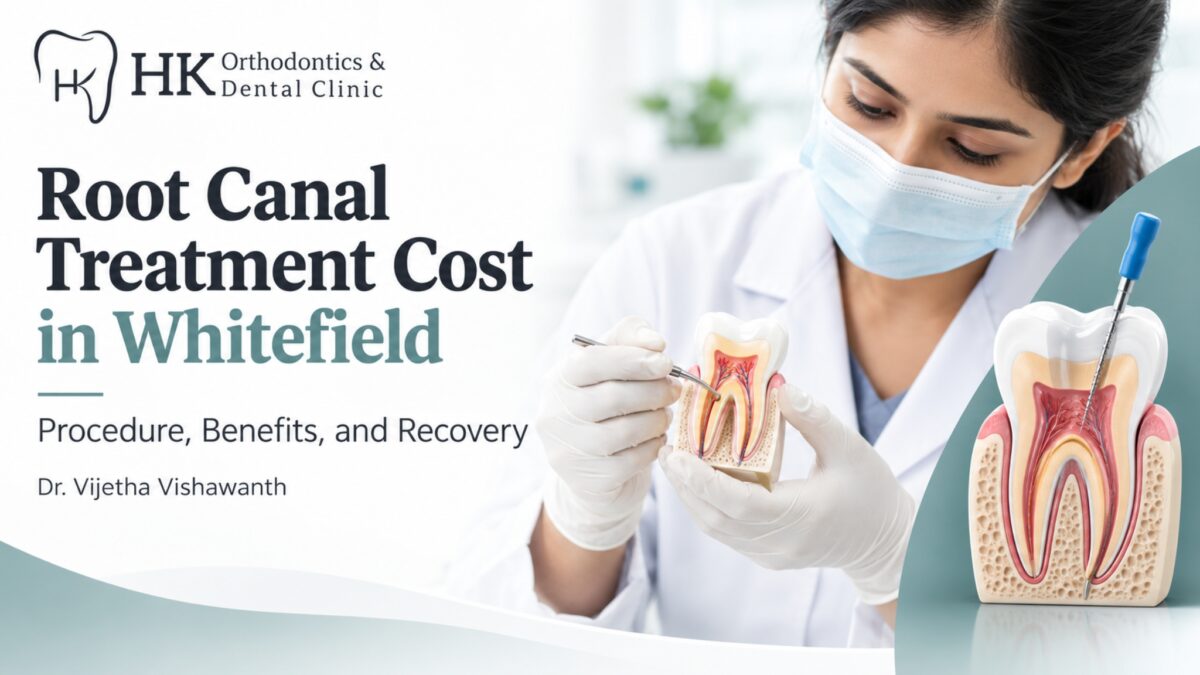
Tooth pain can affect your ability to eat, sleep, and carry out everyday activities comfortably. When deep tooth decay, a crack, or an injury damages the pulp inside a tooth, root canal treatment may be recommended to remove the affected tissue and preserve the natural tooth.
One of the most common questions patients ask is, “What is the cost of root canal treatment in Whitefield?” The answer depends on the tooth being treated, the complexity of its root canals, the severity of the infection, and whether a crown is needed afterwards.
If you are looking for root canal treatment in Whitefield, Bangalore, understanding the procedure, its benefits, recovery, and possible costs can help you prepare for your dental consultation at HK Dental Clinic & Orthodontics.
What Is Root Canal Treatment?
Root canal treatment, also known as endodontic treatment, is a procedure used to treat a tooth whose inner pulp has become irreversibly inflamed, infected, or damaged. The pulp contains nerves and blood vessels and lies within the tooth’s pulp chamber and root canals.
During treatment, the dentist removes the affected pulp, cleans and shapes the canals, and seals the space to reduce the risk of further infection. The tooth is then restored with a suitable filling or, when needed, a dental crown.
The primary goal is to preserve the natural tooth whenever it can be restored predictably. A root canal may help relieve pain caused by pulp disease and restore chewing function, but the final outcome depends on the tooth’s condition and the quality of the restoration.
Patients searching for a dentist in Whitefield, Bangalore should arrange an examination to determine whether root canal treatment is appropriate for their symptoms.
Root Canal Treatment Cost in Whitefield, Bangalore
The cost of root canal treatment varies from patient to patient. There is no single price that applies to every tooth, because the procedure and the final restoration may differ considerably.
Factors That Affect Root Canal Treatment Cost
1. Type of tooth
Front teeth often have a different root canal structure from premolars and molars. Molars may have multiple canals and more complex anatomy, which can increase the time and skill required for treatment.
2. Complexity of the case
Curved or narrow canals, previous unsuccessful treatment, extensive decay, and certain infections may require additional procedures or specialist care.
3. Severity of the infection
The extent of pulp damage and the condition of the tissues around the root can influence the treatment plan. Some cases may require additional appointments or follow-up.
4. Dental crown or final restoration
A root canal treats the inside of the tooth, but the tooth still needs a durable final restoration. Depending on the remaining tooth structure and the amount of chewing pressure, the dentist may recommend a filling or a crown.
5. Diagnostic tests and additional treatment
Dental X-rays, examinations, temporary restorations, or other necessary procedures may affect the total cost. Ask the clinic which items are included in its estimate.
6. The dentist’s experience and technology used
The treating dentist’s training, the complexity of the case, and the clinical techniques used may also influence the overall fee.
How Can You Find the Exact Cost?
The most reliable way to understand the root canal treatment cost in Whitefield is to request a personalised treatment estimate after an examination.
Before beginning treatment, ask the clinic to clarify:
- The fee for the root canal procedure
- Whether X-rays and other diagnostic tests are included
- Whether a temporary filling is required
- Whether a permanent filling or crown is recommended
- The total estimated cost for all planned stages
- Whether follow-up visits are included
The website lists root canal treatment among HK Dental Clinic’s services, but a current, verified root canal price was not available in the information reviewed for this article. Therefore, it is better to obtain a direct quotation than to rely on an unverified price range.
What Are the Signs That You May Need a Root Canal?
Not every toothache requires root canal treatment. However, the following symptoms may indicate damage to the pulp and should be assessed by a dentist.
Persistent Toothache
Pain that continues, returns frequently, or occurs without an obvious trigger may be associated with inflammation or infection inside a tooth.
Prolonged Sensitivity to Hot or Cold
Sensitivity that lingers after the source of heat or cold has been removed can indicate a problem with the pulp. Other conditions can also cause sensitivity, so an examination is necessary.
Pain While Biting
Discomfort when chewing or biting may be associated with pulp inflammation, a crack, or infection around the root.
Swelling Around the Gums
Swelling, a gum boil, or an unpleasant taste near a tooth can indicate infection. Arrange prompt dental care rather than attempting to treat the problem at home.
Deep Tooth Decay
When decay reaches the pulp, a regular filling may no longer be enough. The dentist will assess whether the pulp can recover or whether root canal treatment or another option is needed.
A Cracked or Injured Tooth
Dental trauma or a crack can damage the pulp even when the tooth looks relatively normal from the outside.
Severe pain, facial swelling, or a suspected dental abscess warrants urgent assessment. Difficulty breathing or swallowing requires emergency medical attention.
Step-by-Step Root Canal Procedure
The exact procedure depends on the tooth’s anatomy, the extent of damage, and whether infection is present.
Step 1: Consultation and Diagnosis
The dentist reviews your symptoms, examines the tooth, and may take X-rays to assess the roots and surrounding tissues. This helps establish whether root canal treatment is appropriate.
Step 2: Local Anaesthesia
Local anaesthesia is usually administered to help keep the procedure comfortable. The dentist may use additional measures if needed, depending on the condition of the tooth.
Step 3: Accessing the Pulp
A small opening is made in the tooth to reach the pulp chamber and root canals. The damaged or infected pulp is removed.
Step 4: Cleaning and Shaping
The canals are carefully cleaned, shaped, and disinfected to remove affected tissue and reduce bacteria.
Step 5: Sealing the Root Canals
The cleaned canals are filled with a suitable material and sealed to help prevent reinfection.
Step 6: Final Restoration
The opening is restored with a suitable filling. If the tooth has lost a substantial amount of structure, the dentist may recommend a crown for additional protection.
Some cases can be completed in one visit, while others require multiple appointments. The dentist will explain the expected treatment schedule based on your individual case.
Benefits of Root Canal Treatment
Helps Preserve the Natural Tooth
Root canal treatment can allow a tooth to remain in the mouth rather than being extracted, provided it can be restored successfully.
Addresses the Source of Pulp-Related Pain
Removing the affected pulp can help relieve pain caused by pulp inflammation or infection. Temporary tenderness may occur after treatment, but worsening symptoms should be reviewed.
Helps Control Infection Inside the Tooth
Cleaning and sealing the canals helps manage infection within the tooth. Additional treatment may be necessary if infection has spread into surrounding tissues.
Restores Chewing Function
Once the tooth has been appropriately restored, it can often function normally during chewing. The result depends on the amount of remaining tooth structure and the final restoration.
May Avoid Tooth Replacement
Preserving a natural tooth can reduce the need for replacement procedures such as a bridge, denture, or dental implant. However, not every tooth can be saved.
Supports Long-Term Oral Health
Keeping a restorable tooth can help maintain chewing function and avoid some of the additional procedures associated with a missing tooth.
Root Canal Treatment vs. Tooth Extraction
The choice between root canal treatment and extraction depends on the condition of the tooth and whether it can be predictably restored.
Root canal treatment removes the damaged pulp while retaining the natural tooth. A permanent restoration is usually needed to protect the treated tooth.
Tooth extraction removes the tooth when it cannot be restored reliably or when extraction is otherwise the appropriate clinical option. Depending on the situation, replacement may later be considered.
Ask your dentist to explain the expected benefits, limitations, costs, and long-term implications of each option before making a decision.
Recovery After Root Canal Treatment
Recovery varies depending on the tooth, the severity of the original problem, and the treatment performed. Mild tenderness or discomfort around the treated tooth can occur for a few days.
What to Do After Treatment
Avoid chewing hard foods on the treated tooth: Until your dentist confirms that the tooth is adequately restored, avoid putting excessive pressure on it.
Maintain oral hygiene: Brush twice daily with fluoride toothpaste and clean between your teeth every day.
Follow medication instructions: Take any prescribed medicines exactly as directed. Do not change or stop medication without consulting the prescribing professional.
Complete the final restoration: If a crown or permanent filling is recommended, arrange it within the timeframe advised by your dentist. Delaying restoration can increase the risk of leakage or fracture.
Attend follow-up appointments: Your dentist may need to check healing and ensure that the restoration is functioning properly.
Report worsening symptoms: Increasing pain, swelling, a loose temporary filling, or an uneven bite should be assessed promptly.
How Long Does It Take to Recover From a Root Canal?
Many patients can return to normal daily activities soon after treatment, although the tooth may remain tender for a short period. The exact recovery time depends on the extent of infection, the procedure performed, and the individual’s healing response.
The tooth should not be considered fully protected until the recommended permanent restoration has been completed. A crown may be advised for teeth that have lost significant structure, particularly back teeth that experience strong chewing forces.
If discomfort persists, becomes severe, or is accompanied by swelling, contact your dentist rather than waiting for it to resolve.
How to Choose a Root Canal Clinic in Whitefield
When searching for root canal treatment in Whitefield, Bangalore, consider more than the advertised price.
Qualifications and relevant experience: Ask about the treating dentist’s qualifications and experience with root canal procedures. Complex cases may benefit from assessment by an endodontist.
Clear diagnosis: The dentist should explain the examination findings and why a root canal is recommended.
Transparent pricing: Request an estimate that distinguishes the root canal procedure from any crown, filling, diagnostic tests, or additional treatment.
Infection-control practices: Appropriate sterilisation and hygiene procedures are essential parts of safe dental care.
Follow-up planning: Ask how the treated tooth will be restored and what monitoring may be required.
Patient communication: You should feel comfortable asking questions about discomfort, alternatives, costs, and expected outcomes.
Why Consider HK Dental Clinic & Orthodontics?
HK Dental Clinic & Orthodontics is located in Whitefield, Bangalore, and its official website lists root canal treatment among its dental services. The clinic also lists orthodontic, cosmetic, preventive, and restorative dental care.
Patients can contact the clinic to enquire about root canal treatment in Whitefield, arrange an assessment, and request details about the available treatment options and costs.
Before proceeding, confirm the treating dentist’s qualifications and experience relevant to your case, along with the complete treatment estimate and restoration plan.
Frequently Asked Questions
1. What is the cost of root canal treatment in Whitefield?
The price depends on the tooth being treated, the complexity of its canals, the severity of the infection, and whether a crown or other restoration is needed. Contact the clinic for a current estimate after an examination.
2. Is a dental crown included in the root canal cost?
Not necessarily. Root canal treatment and the final restoration may be charged separately. Ask whether the estimate includes a permanent filling, crown, diagnostic tests, and follow-up appointments.
3. Is root canal treatment painful?
Local anaesthesia is usually used to minimise discomfort during the procedure. Some tenderness can occur afterwards, but severe or worsening pain should be reviewed by the dentist.
4. How many visits are required for a root canal?
Some teeth can be treated in one appointment, while others require multiple visits. The schedule depends on the tooth’s anatomy, the presence of infection, and the complexity of treatment.
5. Is a root canal better than extraction?
If a tooth can be predictably restored, root canal treatment may help preserve it. Extraction may be necessary if the tooth cannot be saved. Your dentist can explain which option is more suitable for your condition.
6. Do I need a crown after a root canal?
A crown is often considered when a tooth has lost a substantial amount of structure or is exposed to high chewing forces. Not every tooth requires a crown, so the decision should be based on a clinical assessment.
7. How long does recovery take?
Many patients experience only temporary tenderness, but recovery varies. Follow your dentist’s instructions and seek advice if pain worsens or swelling develops.
8. Can I delay root canal treatment if the pain goes away?
Pain may temporarily subside even when the underlying problem remains. If a dentist has identified pulp damage or infection, follow the recommended treatment plan rather than assuming that the problem has resolved.
Conclusion
Root canal treatment can help preserve a natural tooth affected by deep decay, pulp damage, or infection. The total cost in Whitefield depends on the tooth’s complexity, the treatment required, and whether a permanent filling or crown is needed.
Before beginning treatment, ask for a clear estimate covering all stages of care. Understanding the procedure, following aftercare instructions, and completing the recommended restoration can help protect the treated tooth over the long term.
If you are experiencing persistent toothache, sensitivity, pain while chewing, or swelling, arrange a dental examination promptly.
HK Dental Clinic & Orthodontics
Address: 205/A, 2nd Floor, Arcadia Grace, SH 35, Whitefield Main Road, opposite St Joseph’s Convent School, Sathya Sai Layout, Whitefield, Bengaluru, Karnataka 560066
Phone: +91 96327 06436
Email: info@hkdentalclinic.com
Website: hkdentalclinic.com