
Best Orthodontist in Whitefield, Bangalore: Braces and Invisalign Treatment | Dr. Vivek Aithal
October 17, 2026
Best Invisalign Dentist in Whitefield: Benefits, Cost, and Treatment Process | Dr. Vivek Aithal
October 17, 2026
A persistent toothache, sensitivity to hot or cold foods, or pain while chewing may indicate a problem deeper inside a tooth. One possible cause is inflammation or infection of the dental pulp, the soft tissue containing nerves and blood vessels. When the pulp is affected, root canal treatment may help preserve the natural tooth and restore its function.
If you are searching for the best root canal specialist in Whitefield, Bangalore, understanding the procedure, its benefits, and when it may be necessary can help you make an informed decision. At HK Dental Clinic & Orthodontics, patients can explore dental care options, including root canal treatment, based on their symptoms and clinical needs.
What Is Root Canal Treatment?
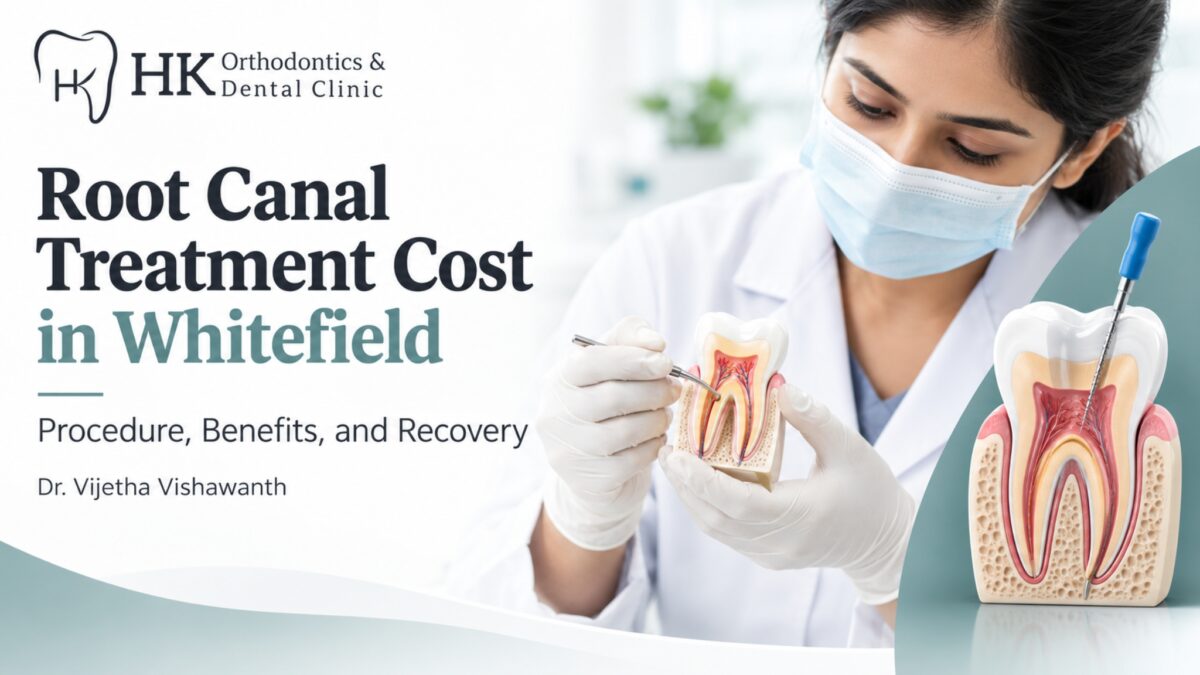
Root canal treatment, also called endodontic treatment, is a dental procedure used to treat a tooth with damaged, inflamed, or infected pulp. The pulp may become affected by deep tooth decay, cracks, fractures, or dental trauma.
During the procedure, the dentist removes the affected pulp, cleans and shapes the inside of the tooth, and seals the root canals. The tooth is then restored with a suitable filling or, when necessary, a crown to help protect it from further damage.
Unlike tooth extraction, which removes the entire tooth, root canal treatment aims to preserve the natural tooth whenever it can be predictably restored.
For patients looking for root canal treatment in Whitefield, Bangalore, an examination and appropriate dental imaging can help determine whether this treatment is suitable.
When Do You Need Root Canal Treatment?
Not every toothache requires a root canal. However, certain symptoms may indicate that the pulp is inflamed or infected and needs professional assessment.
1. Persistent Toothache
Pain that continues, returns frequently, or occurs without an obvious trigger may indicate a deeper dental problem. The location and intensity of the pain do not always reveal the severity of the condition, so an examination is important.
2. Prolonged Sensitivity to Hot and Cold
Sensitivity that continues after the hot or cold food or drink has been removed may be a sign of pulp inflammation. Ordinary tooth sensitivity can have other causes, so a dentist must evaluate the tooth before recommending treatment.
3. Pain While Chewing or Biting
Discomfort when biting down can be associated with pulp inflammation, a cracked tooth, or infection around the root. A dental examination helps identify the underlying cause.
4. Swelling Around the Gums
Swelling near a tooth, a gum boil, or a persistent unpleasant taste may indicate an infection. These symptoms should be assessed promptly because a dental infection can spread.
5. Deep Tooth Decay
When a cavity progresses through the enamel and dentine and affects the pulp, a routine filling may no longer be sufficient. Depending on the diagnosis, root canal treatment may be recommended to preserve the tooth.
6. A Cracked or Injured Tooth
A crack, fracture, or injury can damage the pulp even when the outside of the tooth appears relatively intact. Early assessment can help determine the extent of damage and the available treatment options.
If you experience severe tooth pain or facial swelling, seek urgent dental care. Difficulty breathing or swallowing requires emergency medical attention.
How Is Root Canal Treatment Performed?
The exact procedure depends on the affected tooth, the complexity of its root canals, and the extent of infection or damage. In general, treatment involves the following stages.
Step 1: Dental Examination and Diagnosis
The dentist reviews your symptoms, examines the affected tooth, and may take dental X-rays to assess the roots and surrounding bone. This helps establish whether root canal treatment is appropriate.
Step 2: Local Anaesthesia
Local anaesthesia is usually administered to help keep the procedure comfortable. The dentist may use additional measures when needed, depending on the condition of the tooth and the patient’s response to anaesthesia.
Step 3: Accessing the Inner Tooth
A small opening is made in the tooth to access the pulp chamber and root canals. The damaged or infected pulp is then removed.
Step 4: Cleaning and Shaping the Canals
The dentist carefully cleans and shapes the root canals and disinfects the internal space to reduce bacteria and remove affected tissue.
Step 5: Filling and Sealing the Canals
After cleaning, the canals are filled with a suitable dental material and sealed to help prevent reinfection.
Step 6: Restoring the Tooth
The access opening is restored with a filling. Depending on the tooth’s location and the amount of remaining structure, a crown may be recommended to protect the tooth against fracture.
Follow-up visits may be needed to complete the restoration and check healing.
Benefits of Root Canal Treatment
Root canal treatment offers several potential benefits when the tooth can be successfully treated and restored.
Preserves Your Natural Tooth
One of the main advantages is the opportunity to retain the natural tooth instead of extracting it. Keeping the tooth can help maintain normal chewing and reduce the need for certain tooth-replacement procedures.
Helps Relieve Pain Caused by Pulp Disease
Removing inflamed or infected pulp can address the source of pain. Some tenderness may remain for a short time after treatment, but increasing or persistent pain should be reviewed by the dentist.
Helps Control Infection
Cleaning and sealing the root canals helps manage infection inside the tooth. If an abscess or infection has spread beyond the tooth, additional treatment or follow-up may be necessary.
Restores Chewing Function
After the tooth has been appropriately restored, it can often return to normal function. The final result depends on the remaining tooth structure, the quality of the restoration, and the tooth’s overall condition.
Can Reduce the Need for Extraction
When the tooth is restorable, root canal treatment may provide an alternative to extraction. However, severely fractured or extensively damaged teeth may not be suitable for preservation.
Supports Long-Term Oral Health
Maintaining a restorable natural tooth can help preserve chewing function and avoid some of the additional treatment associated with replacing a missing tooth.
Is Root Canal Treatment Painful?
Modern root canal treatment is usually performed under local anaesthesia to minimise discomfort. Many patients seek treatment because the tooth is already painful, and treating the underlying problem may help relieve that pain.
You may experience temporary tenderness or mild discomfort after the procedure, especially when biting. This should generally improve over time. If pain becomes severe, swelling develops, or symptoms fail to improve, contact your dentist for a review.
Tell your dentist about any concerns you have regarding pain, anaesthesia, or previous dental experiences before the procedure.
What Happens If You Delay Root Canal Treatment?
If a tooth has pulp damage or infection and treatment is delayed, the problem may progress. Possible consequences include:
- Worsening or recurring toothache
- Infection around the root of the tooth
- Formation of a dental abscess
- Damage to the surrounding bone and tissues
- A greater risk of losing the tooth
- The need for more extensive treatment
Not every affected tooth progresses at the same rate, and symptoms may sometimes temporarily subside even when the underlying problem remains. A reduction in pain does not necessarily mean that an infection has resolved.
Early assessment can help clarify the diagnosis and identify the most appropriate treatment.
Root Canal Treatment vs. Tooth Extraction
The right choice depends on whether the tooth can be restored and on the patient’s overall dental health.
Root canal treatment: Removes the damaged pulp while preserving the natural tooth. The tooth usually needs a suitable final restoration and ongoing care.
Tooth extraction: Removes the tooth when it cannot be predictably preserved or when extraction is otherwise the appropriate option. Replacing the missing tooth may later involve an implant, bridge, or denture, depending on the situation.
Your dentist can explain the expected benefits, limitations, costs, and long-term implications of each option before you decide.
What Is the Cost of Root Canal Treatment in Whitefield, Bangalore?
The cost of root canal treatment varies according to several factors, including:
- Which tooth requires treatment
- The number and complexity of the root canals
- The extent of infection or damage
- Whether additional procedures are required
- Whether a crown or another final restoration is recommended
- The need for follow-up treatment
Front teeth and molars can involve different levels of complexity. A molar may have multiple canals that require careful cleaning and sealing.
For an accurate estimate, arrange an examination with a dental clinic and ask for a treatment plan that explains the procedure, restoration, and any additional costs. Avoid choosing treatment based on price alone; the diagnosis, treatment quality, and long-term restorability of the tooth are also important.
How to Care for Your Tooth After Root Canal Treatment
Aftercare helps protect the treated tooth and supports recovery.
Avoid Chewing Hard Foods on the Treated Tooth
Until the permanent restoration is completed, avoid placing excessive pressure on the tooth. A tooth that has undergone root canal treatment may be more vulnerable to fracture, particularly when significant tooth structure has been lost.
Maintain Good Oral Hygiene
Brush twice daily with fluoride toothpaste and clean between your teeth daily. Root canal treatment does not prevent cavities from developing in the remaining tooth structure.
Follow Your Dentist’s Instructions
Take prescribed medication only as directed and attend recommended follow-up visits. Do not stop or change prescribed medication without consulting your healthcare professional.
Complete the Final Restoration
If a crown or permanent filling is recommended, arrange it within the timeframe advised by your dentist. Delaying the final restoration may increase the risk of leakage or fracture.
Contact Your Dentist if Symptoms Worsen
Persistent pain, swelling, a loose temporary filling, or a bite that feels uneven should be checked. Prompt attention can help identify problems that need further treatment.
How to Choose the Best Root Canal Specialist in Whitefield
Choosing a dental professional involves more than searching for the highest-rated clinic. Consider the following points when evaluating your options.
Relevant Training and Clinical Experience
Ask about the dentist’s qualifications and experience in diagnosing and treating teeth with pulp disease. Complex cases may require assessment by an endodontist, a dentist with specialised training in root canal treatment.
Accurate Diagnosis
A good treatment plan should be based on symptoms, examination findings, and appropriate imaging. Ask the dentist to explain why a root canal is recommended and whether alternative treatments are available.
Clear Communication
Your dentist should explain the treatment stages, likely number of visits, expected recovery, restoration options, and potential risks in language you understand.
Sterilisation and Infection Control
Appropriate instrument sterilisation and infection-control practices are essential parts of safe dental care.
Follow-Up and Restoration Planning
Root canal treatment is not complete simply because the canals have been sealed. Ask how the tooth will be restored and what follow-up care is recommended.
Patients searching for a dentist in Whitefield, Bangalore can contact HK Dental Clinic & Orthodontics to enquire about available root canal services, the treating dentist’s experience, and appointment availability.
Why Consider HK Dental Clinic & Orthodontics in Whitefield?
HK Dental Clinic & Orthodontics is located in Whitefield, Bangalore, and its official website lists root canal treatment among its dental services. The clinic also provides orthodontic, cosmetic, preventive, and restorative dental care.
When enquiring about root canal treatment in Whitefield, patients can discuss their symptoms, arrange a dental examination, and ask about the available treatment options and expected costs.
The appropriate treatment depends on the clinical condition of the tooth. Ask the clinic to confirm the treating dentist’s qualifications and experience relevant to your particular case before proceeding.
Frequently Asked Questions About Root Canal Treatment
1. How do I know if I need a root canal?
Persistent toothache, prolonged sensitivity to hot or cold, pain when biting, swelling, or deep decay may indicate a problem with the pulp. A dentist must examine the tooth and may take X-rays to confirm the diagnosis.
2. How many visits does root canal treatment take?
Some cases can be completed in one visit, while others require multiple appointments. The number of visits depends on the tooth’s anatomy, the complexity of treatment, the presence of infection, and the restoration required.
3. Can a root canal save a badly decayed tooth?
It may be possible if enough healthy tooth structure remains to restore the tooth. If the tooth is severely fractured or cannot be restored predictably, extraction may be recommended instead.
4. Do I need a crown after root canal treatment?
Not every treated tooth needs a crown. However, teeth that have lost a substantial amount of structure, especially back teeth exposed to heavy chewing forces, may benefit from one. Your dentist will assess the tooth and recommend an appropriate restoration.
5. How long does a root canal-treated tooth last?
A treated tooth can last for many years with appropriate treatment, a suitable final restoration, good oral hygiene, and regular dental check-ups. Its longevity depends on the amount of remaining tooth structure, the quality of the restoration, and other oral health factors.
6. Can an infected tooth heal without a root canal?
If the pulp is irreversibly inflamed or infected, it generally requires professional treatment. Depending on the diagnosis, options may include root canal treatment or extraction. Antibiotics alone do not eliminate the source of infection inside a tooth.
7. Is root canal treatment better than extraction?
When a tooth can be predictably restored, root canal treatment may help preserve it. Extraction may be necessary when the tooth cannot be saved. Your dentist can compare the benefits, limitations, and costs of both approaches.
8. What should I avoid after a root canal?
Avoid chewing hard foods on the treated tooth until your dentist confirms it is adequately restored. Maintain oral hygiene, follow the aftercare instructions, and attend scheduled follow-up appointments.
Conclusion
Root canal treatment can help preserve a natural tooth affected by deep decay, pulp inflammation, or infection. By removing the damaged pulp, cleaning the canals, and sealing the tooth, the procedure can help relieve symptoms and restore chewing function when the tooth is suitable for treatment.
If you have persistent tooth pain, sensitivity, swelling, or pain while chewing, arrange a dental assessment rather than waiting for the symptoms to worsen. Choosing a qualified dentist, understanding your treatment options, and completing the recommended final restoration are important steps towards maintaining long-term oral health.
For patients looking for root canal treatment in Whitefield, Bangalore, HK Dental Clinic & Orthodontics can be contacted to enquire about its listed services and arrange a consultation.
HK Dental Clinic & Orthodontics
Address: 205/A, 2nd Floor, Arcadia Grace, SH 35, Whitefield Main Road, opposite St Joseph’s Convent School, Sathya Sai Layout, Whitefield, Bengaluru, Karnataka 560066
Phone: +91 96327 06436
Email: info@hkdentalclinic.com
Website: hkdentalclinic.com