
Small Dental Problems Can Become Big: Warning Signs You Shouldn’t Ignore – HK Dental Clinic
September 26, 2026
Best Root Canal Specialist in Whitefield, Bangalore: Treatment and Benefits | Dr. Vijetha Vishawanth
October 17, 2026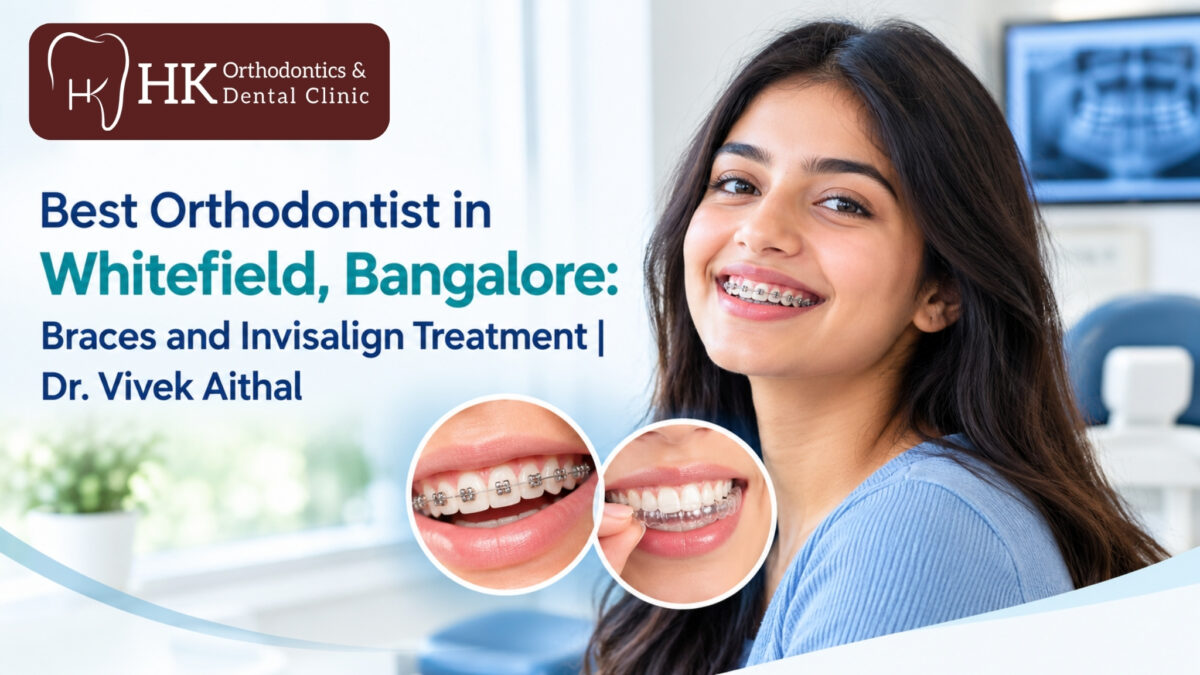
A straight, well-aligned smile can make a difference to your confidence, oral hygiene, and overall dental health. However, crowded teeth, gaps, crooked teeth, and bite problems can make it difficult to maintain proper oral hygiene or feel comfortable with your smile. Modern orthodontic treatments offer effective options to address these concerns, including traditional braces, ceramic braces, and clear aligners.
If you are searching for the Best Orthodontist in Whitefield, Bangalore, understanding the available treatment options can help you make an informed decision. At HK Dental Clinic & Orthodontics, Dr. Vivek Aithal provides orthodontic care, including braces and Invisalign treatment, with plans tailored to each patient’s dental alignment, bite, and treatment goals.
This guide explains how braces and Invisalign work, who may benefit from them, their advantages, and what to consider when choosing an orthodontist in Whitefield.
What Does an Orthodontist Do?
An orthodontist focuses on diagnosing and treating irregular tooth alignment and bite problems. Orthodontic treatment uses controlled forces to gradually move teeth into more suitable positions and improve the way the upper and lower teeth meet.
Common concerns addressed through orthodontic treatment include:
- Crowded or overlapping teeth
- Gaps between teeth
- Crooked or rotated teeth
- Overbite and underbite
- Crossbite
- Certain alignment-related chewing difficulties
The right treatment depends on the severity of the misalignment, jaw relationship, age, dental health, and individual goals. An orthodontic consultation helps determine whether braces, clear aligners, or another approach is appropriate.
Why Choose an Orthodontist in Whitefield, Bangalore?
Choosing an orthodontic provider involves more than comparing treatment prices. You should consider the clinician’s experience, available treatment options, diagnostic process, follow-up schedule, and approach to long-term results.
When looking for orthodontic treatment in Whitefield, consider the following factors.
Experience in Braces and Clear Aligners
Different alignment concerns require different treatment approaches. An experienced orthodontic provider can evaluate your teeth and bite and explain the potential benefits and limitations of braces and aligners for your specific case.
Personalised Treatment Planning
Every patient’s teeth, bite, and treatment goals are different. A personalised plan should explain the recommended appliance, expected treatment stages, approximate duration, costs, and follow-up requirements.
Modern Diagnostic Technology
Digital dental scans and appropriate dental imaging can help assess tooth positions and support treatment planning. For clear aligner treatment, digital planning may also provide a visual representation of the proposed tooth movements.
Regular Monitoring and Follow-Up
Orthodontic treatment requires monitoring to assess progress and make adjustments when necessary. Regular appointments help the clinician check tooth movement, appliance condition, oral hygiene, and treatment progress.
Retention After Treatment
Once braces or aligners have corrected tooth alignment, retainers are generally required to help maintain the result. Teeth can gradually shift after treatment, so following the retention plan is an important part of orthodontic care.
Types of Braces Available at HK Dental Clinic
Braces are fixed orthodontic appliances that use brackets and wires to move teeth gradually. They may be suitable for a wide range of alignment and bite concerns.
1. Metal Braces
Metal braces use brackets attached to the teeth and a wire that guides tooth movement. They are a well-established option for treating many orthodontic problems.
Benefits of metal braces:
- Suitable for many types of tooth misalignment
- Can address a broad range of bite problems
- Remain attached throughout treatment
- Do not need to be removed for meals
Metal braces are visible, and patients need to take care when eating hard or sticky foods. Brushing and cleaning around the brackets also require extra attention.
2. Ceramic Braces
Ceramic braces work in a similar way to metal braces, but their brackets are tooth-coloured or designed to blend with the teeth.
Benefits of ceramic braces:
- Less noticeable than traditional metal braces
- Fixed appliance for continuous treatment
- Suitable for selected alignment concerns
Ceramic brackets can be more prone to chipping than metal brackets, and some components may stain. Your orthodontist can explain whether ceramic braces are suitable for your treatment needs.
For more information about available options, visit braces treatment at HK Dental Clinic.
What Is Invisalign Treatment?
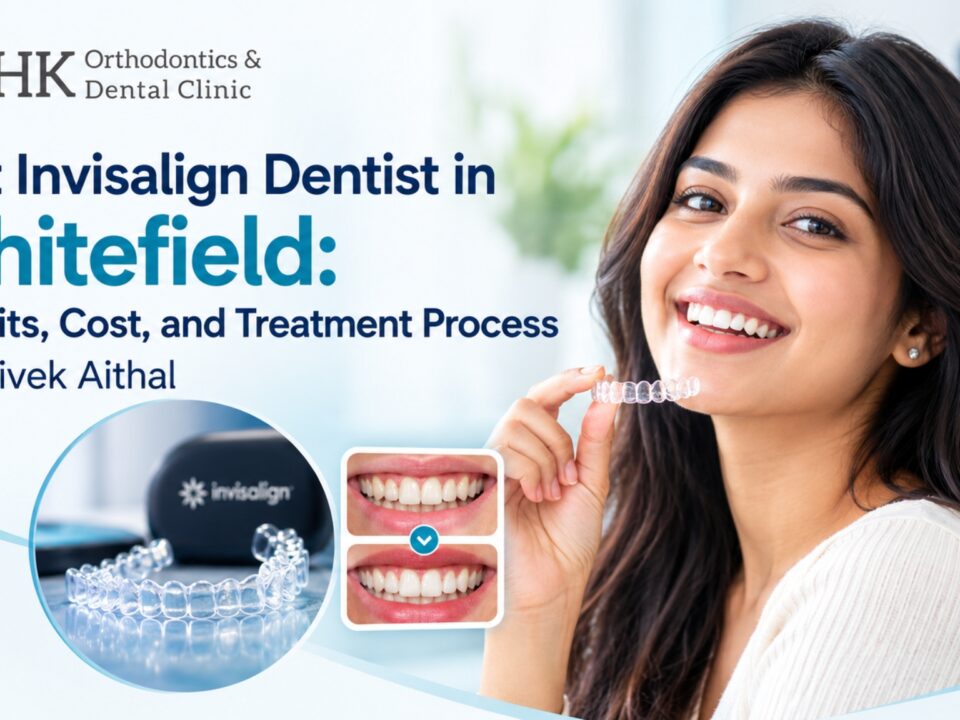
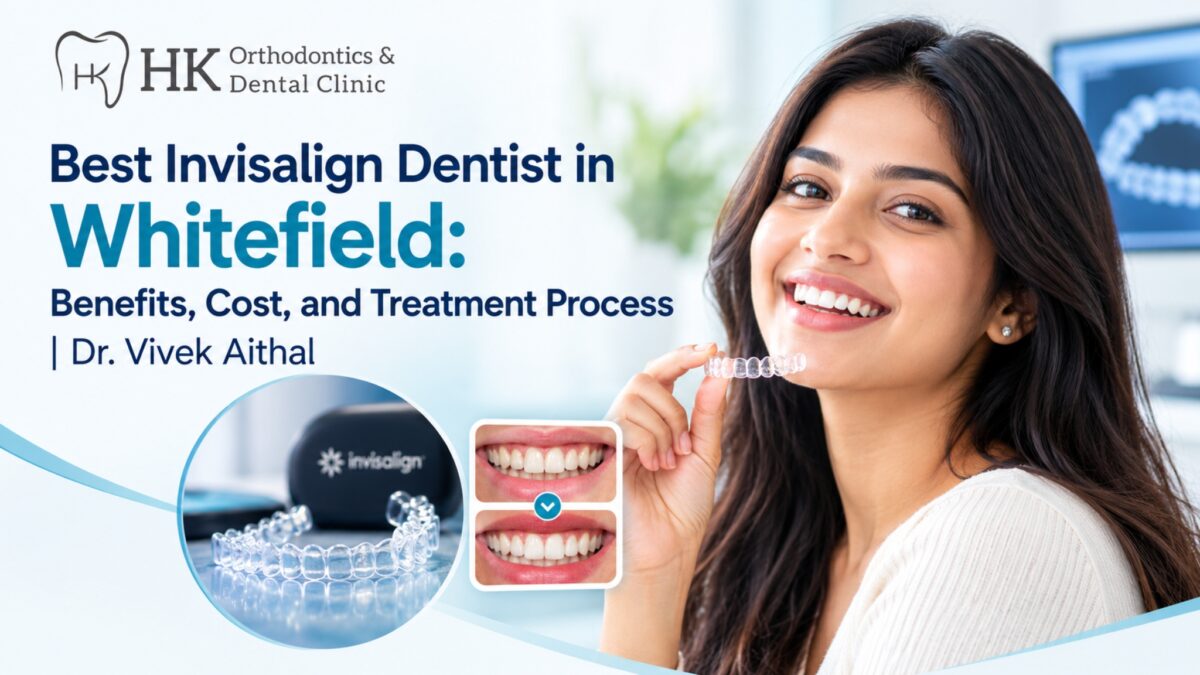
Invisalign treatment in Whitefield, Bangalore uses a series of custom-made, transparent aligner trays to move teeth gradually. Unlike fixed braces, the aligners can be removed for eating, drinking anything other than water, brushing, and flossing.
Each set of aligners is designed to make specific tooth movements. As treatment progresses, the patient changes to the next set according to the orthodontist’s instructions.
Benefits of Invisalign
Discreet appearance: The transparent material makes aligners less noticeable than many conventional braces.
Removable design: Patients can remove aligners for meals and daily oral hygiene.
Convenient cleaning: Because aligners are removable, brushing and flossing can be easier than cleaning around fixed brackets.
Digital treatment planning: Digital scans and planning tools can help the clinician plan tooth movements and show a proposed treatment simulation.
No fixed brackets or wires: Aligners do not use the same brackets and wires as traditional braces, although temporary attachments may be needed on some teeth.
Invisalign is not suitable for every orthodontic case. Treatment suitability depends on the type and severity of the misalignment, the bite, and the patient’s ability to wear the aligners as prescribed.
Invisalign vs. Traditional Braces: Which Is Better?
Both Invisalign and traditional braces can help improve tooth alignment. The most suitable choice depends on the individual case and the orthodontist’s assessment.
| Feature | Invisalign | Traditional braces |
|---|---|---|
| Appearance | Clear, less noticeable trays | Visible brackets and wires |
| Removability | Removable for meals and cleaning | Fixed throughout treatment |
| Oral hygiene | Easier to brush and floss without an appliance in place | Requires careful cleaning around brackets |
| Eating | Remove aligners before meals | Certain hard or sticky foods should be avoided |
| Compliance | Requires consistent daily wear | Remains attached to teeth |
| Treatment suitability | Suitable for many, but not all, cases | Suitable for a broad range of alignment concerns |
There is no single option that is best for everyone. Some complex tooth movements may be managed more predictably with fixed braces, while many suitable patients may prefer clear aligners for their appearance and convenience.
Your orthodontist can explain the likely benefits, limitations, treatment duration, and cost of each option.
Who Can Benefit from Braces or Invisalign?
Orthodontic treatment may be appropriate for teenagers and adults who have concerns about tooth alignment or the way their teeth meet.
You may benefit from an orthodontic assessment if you have:
- Crowded teeth that are difficult to clean
- Noticeable spaces between teeth
- Crooked or rotated teeth
- An overbite, underbite, or crossbite
- Teeth that do not meet comfortably when chewing
- Teeth that have shifted after earlier orthodontic treatment
Before treatment begins, the dentist or orthodontist should assess your teeth, gums, bite, and overall oral health. Existing cavities or gum disease may need to be treated first.
How Does Braces or Invisalign Treatment Work?
Although the appliances are different, both treatments require an initial assessment, a personalised plan, progress monitoring, and retention afterward.
Step 1: Orthodontic Consultation
Your orthodontist examines tooth alignment, bite relationships, and dental health. Your goals and concerns are discussed to understand what you would like to achieve.
Step 2: Records and Digital Scanning
Photographs, dental scans, and X-rays may be taken when clinically indicated. These records help the clinician evaluate tooth positions and plan treatment.
Step 3: Personalised Treatment Plan
Your orthodontist recommends braces or aligners based on the clinical findings. The plan should cover the expected stages, estimated duration, costs, and any additional procedures that may be needed.
Step 4: Starting Treatment
For braces, brackets are attached to the teeth and connected with orthodontic wires. For Invisalign, the patient receives custom-made aligners and instructions for wearing and changing them.
Step 5: Progress Reviews
Regular appointments help monitor tooth movement and address issues such as loose brackets, damaged appliances, discomfort, or aligners that no longer fit properly.
Step 6: Retainers
Once the planned tooth movements are complete, retainers help maintain the new positions. Your orthodontist will explain how often to wear them and how long retention may be needed.
How Long Does Orthodontic Treatment Take?
Treatment duration varies according to the complexity of the case, the amount of tooth movement required, the appliance used, and patient compliance.
Some straightforward cases may take less time, while complex bite problems or substantial tooth movements may require longer treatment. Invisalign treatment also depends on wearing aligners consistently for the prescribed number of hours each day.
Your orthodontist can provide an estimated timeline after examining your teeth. The estimate may change if tooth movement is slower than expected or the treatment plan needs to be adjusted.
What Is the Cost of Braces and Invisalign in Whitefield?
The cost of braces and Invisalign treatment in Whitefield depends on the type of appliance, the complexity of tooth movement, treatment duration, and the follow-up care required.
Metal braces, ceramic braces, and clear aligners may have different costs. Additional factors, such as diagnostic records, replacement aligners, retainers, or other required dental procedures, may also affect the total.
Before starting treatment, ask for a clear breakdown of the treatment fee, payment schedule, follow-up charges, and retention costs. HK Dental Clinic’s website provides information about its invisible braces service; confirm current pricing and available offers directly with the clinic.
How to Care for Your Teeth During Orthodontic Treatment
Good oral hygiene is essential while wearing braces or clear aligners. Orthodontic appliances can make cleaning more challenging, and inadequate hygiene may increase the risk of cavities, gum inflammation, and white spots on the teeth.
Brush Thoroughly
Brush twice daily with fluoride toothpaste. If you wear fixed braces, clean carefully around each bracket and along the gumline.
Clean Between Your Teeth
Use dental floss, interdental brushes, or another tool recommended by your dentist to remove plaque from areas a toothbrush may not reach.
Follow Food Instructions for Braces
Avoid biting hard foods and chewing sticky items that may damage brackets or wires. Cut firmer foods into smaller pieces when needed.
Wear Invisalign Aligners as Prescribed
Aligners generally need to be worn for most of the day, according to your orthodontist’s instructions. Remove them for meals and clean them as directed.
Keep Aligners Clean
Clean aligners using the recommended method and avoid exposing them to hot water, which may distort the plastic. Store them in their case when they are not being worn.
Attend Scheduled Reviews
Keep follow-up appointments so your orthodontist can assess progress and address any problems promptly.
Why Choose HK Dental Clinic & Orthodontics for Braces and Invisalign?
HK Dental Clinic & Orthodontics in Whitefield offers orthodontic options that include metal braces, ceramic braces, and Invisalign or clear aligner treatment. The clinic’s website identifies Dr. Vivek Aithal as its orthodontic provider and describes digital scanning and personalised treatment planning as part of its invisible braces service.
Patients searching for the Best Orthodontist in Whitefield, Bangalore can arrange a consultation to discuss their alignment concerns, compare treatment options, and understand the likely duration and costs.
The right treatment should be based on a clinical assessment rather than appearance or price alone. Your orthodontist can explain which approach is suitable for your teeth and bite.
Frequently Asked Questions About Braces and Invisalign
1. Who is the best orthodontist in Whitefield, Bangalore?
The right orthodontist is one who can assess your specific needs, explain the available options, and provide an appropriate treatment and follow-up plan. HK Dental Clinic & Orthodontics lists Dr. Vivek Aithal as its orthodontic provider and offers braces and Invisalign-related services.
2. Is Invisalign better than traditional braces?
Neither option is universally better. Invisalign offers a removable, discreet alternative, while traditional braces may be preferred for certain complex tooth movements. The best choice depends on the clinical case and the patient’s ability to follow treatment instructions.
3. Are braces suitable for adults?
Yes. Adults can benefit from orthodontic treatment if their teeth and gums are sufficiently healthy. The recommended appliance depends on the alignment concern, bite, and treatment goals.
4. How many hours a day should Invisalign be worn?
Invisalign aligners are generally worn for approximately 20–22 hours per day, or as directed by the treating orthodontist. Consistent wear is important for achieving the planned tooth movements.
5. Do braces or Invisalign hurt?
Some pressure, tightness, or mild soreness can occur when braces are adjusted or a new aligner is started. This usually improves as the mouth adapts. Persistent or severe pain should be discussed with your orthodontist.
6. How much does Invisalign cost in Whitefield?
The cost depends on the complexity of the case, treatment duration, and the plan recommended. Contact HK Dental Clinic directly for a current estimate and details of any available payment options.
7. Do I need retainers after braces or Invisalign?
Retainers are generally recommended after orthodontic treatment to help prevent teeth from shifting back. Follow your orthodontist’s instructions about wearing and maintaining them.
8. Can Invisalign fix crowded teeth and gaps?
Invisalign can treat many cases of crowding and spacing. However, suitability depends on the degree of misalignment and other bite concerns, which should be assessed by an orthodontist.
Conclusion
Braces and Invisalign offer different ways to improve tooth alignment, address selected bite problems, and support long-term oral health. Traditional braces are suitable for a wide range of orthodontic concerns, while clear aligners offer a discreet and removable option for many patients.
Choosing the right treatment starts with an orthodontic examination, an individualised plan, and a clear understanding of costs, treatment duration, and aftercare. Consistent oral hygiene, regular follow-up appointments, and wearing retainers as prescribed all contribute to maintaining the results.
If you are considering braces or Invisalign treatment in Whitefield, Bangalore, contact HK Dental Clinic & Orthodontics to arrange a consultation with Dr. Vivek Aithal.
HK Dental Clinic & Orthodontics
Address: 205/A, 2nd Floor, Arcadia Grace, SH 35, Whitefield Main Road, opposite St. Joseph’s Convent School, Sathya Sai Layout, Whitefield, Bengaluru, Karnataka 560066
Phone: +91 96327 06436
Email: info@hkdentalclinic.com
Working hours: Monday–Sunday, 10:00 AM–8:30 PM
Website: hkdentalclinic.com