
Best Invisalign Dentist in Whitefield, Bangalore: Everything You Need to Know Before Starting Treatment
June 28, 2026
HK Dental’s Guide to Choosing a Pediatric Dentist
July 21, 2026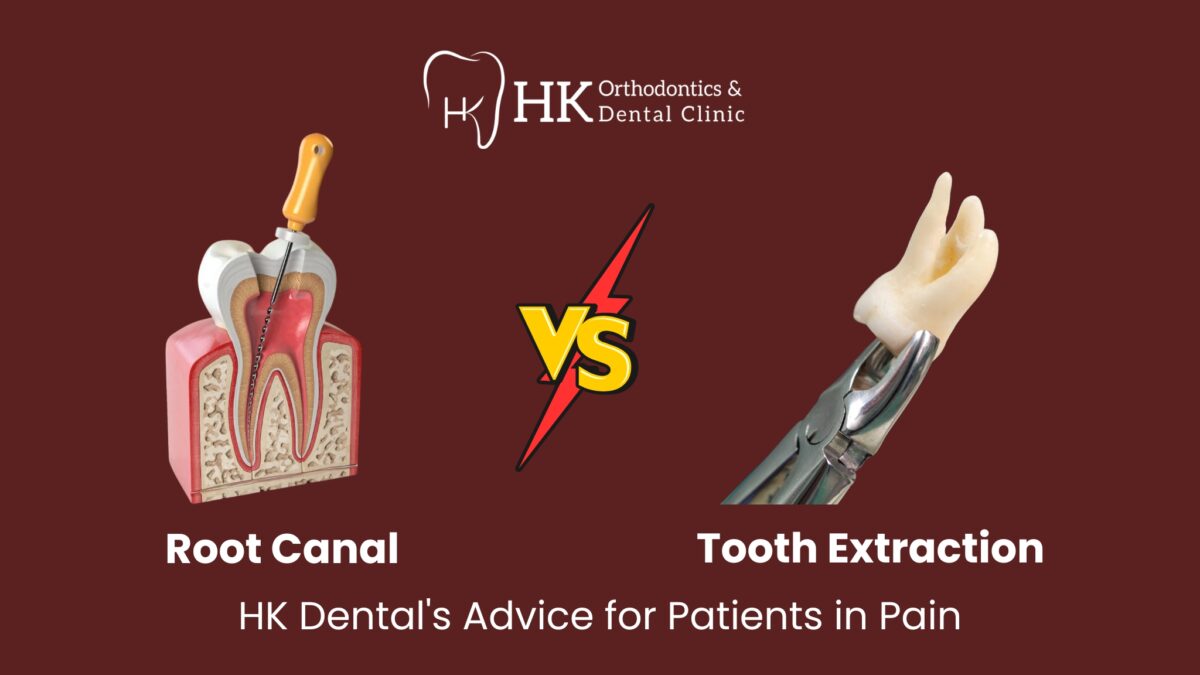
A severe toothache can make even the simplest daily activities difficult. Whether you’re experiencing constant pain, swelling, or sensitivity, your dentist may recommend either a Root Canal Treatment or Tooth Extraction. Many patients wonder which option is better. The answer depends on the condition of the tooth, the severity of the infection, your overall oral health, and your long-term dental goals.
At HK Dental, preserving your natural teeth is always the first priority whenever possible. Experienced dentists perform a detailed examination and recommend the most suitable treatment based on your individual condition, helping you achieve lasting pain relief and maintain a healthy smile.
Understanding Root Canal Treatment
A Root Canal Treatment is a procedure that removes infected or damaged pulp from inside the tooth while preserving the natural tooth structure. After cleaning and disinfecting the canals, the tooth is sealed and usually restored with a dental crown for strength and protection.
Modern Root Canal Treatment is performed under local anesthesia, making it a comfortable and highly successful procedure.
What Is Tooth Extraction?
Tooth Extraction involves removing a tooth that cannot be saved because of severe decay, advanced infection, trauma, or extensive structural damage.
While extraction eliminates the source of infection, replacing the missing tooth is usually recommended to restore chewing function, prevent shifting of adjacent teeth, and maintain jawbone health.
When Is a Root Canal Recommended?
A dentist may recommend Root Canal Treatment if the tooth can still be preserved.
Common indications include:
- Deep tooth decay
- Infected dental pulp
- Severe tooth sensitivity
- Persistent tooth pain
- Cracked tooth affecting the pulp
- Dental abscess
- Trauma causing nerve damage
Saving the natural tooth is generally considered the best long-term option whenever feasible.
When Is Tooth Extraction Necessary?
Sometimes a tooth is too damaged to restore.
Extraction may be necessary if you have:
- Extensive tooth fracture below the gumline
- Severe periodontal disease with loose teeth
- Advanced tooth decay beyond restoration
- Impacted wisdom tooth
- Failed tooth with insufficient remaining structure
- Overcrowding before orthodontic treatment
Your dentist will only recommend extraction when the tooth cannot be predictably saved.
Root Canal vs Tooth Extraction: Key Differences
| Feature | Root Canal Treatment | Tooth Extraction |
|---|---|---|
| Purpose | Saves the natural tooth | Removes the damaged tooth |
| Pain Relief | Eliminates infection while preserving the tooth | Removes the source of pain and infection |
| Natural Tooth | Preserved | Lost |
| Appearance | Maintains your natural smile | Usually requires replacement |
| Chewing Function | Fully restored after crown placement | May be reduced until replacement |
| Recovery | Mild discomfort for a few days | Healing may take several days to weeks |
| Long-Term Cost | Often more economical when preserving the tooth | May require implant, bridge, or denture, increasing total cost |
Why Saving Your Natural Tooth Is Often the Better Choice
Whenever possible, dentists prefer Root Canal Treatment because it offers several long-term advantages.
Benefits include:
- Preserves your natural tooth
- Maintains normal chewing ability
- Prevents neighboring teeth from shifting
- Preserves jawbone health
- Maintains your natural smile
- Eliminates infection without removing the tooth
- Often avoids more complex restorative procedures
Keeping your natural tooth usually provides the best long-term functional and aesthetic outcome.
Advantages of Tooth Extraction
Although preserving the tooth is preferred, extraction may be the most appropriate treatment in certain cases.
Benefits include:
- Removes severely damaged teeth
- Eliminates advanced infection
- Prevents infection from spreading
- Relieves severe pain
- Creates space when needed for orthodontic treatment
- Allows planning for permanent tooth replacement
Following extraction, your dentist may recommend a Dental Implant, Dental Bridge, or Partial Denture to restore the missing tooth.
Recovery After Root Canal Treatment
Most patients recover quickly after Root Canal Treatment.
Recovery tips include:
- Avoid chewing on the treated tooth until permanent restoration
- Take prescribed medications
- Maintain excellent oral hygiene
- Brush and floss gently
- Attend follow-up appointments
- Get the recommended dental crown placed promptly
Most patients return to normal activities the following day.
Recovery After Tooth Extraction
Healing after Tooth Extraction usually requires a little more care.
Patients should:
- Bite on gauze to control bleeding
- Avoid smoking
- Avoid drinking through a straw
- Eat soft foods
- Use cold compresses
- Follow medication instructions
- Maintain gentle oral hygiene
Proper aftercare promotes faster healing and reduces complications such as dry socket.
What Happens If You Delay Treatment?
Ignoring severe tooth pain may lead to:
- Worsening infection
- Dental abscess
- Facial swelling
- Bone loss
- Spread of infection
- Tooth fracture
- Tooth loss
- Increased treatment costs
Early diagnosis often allows dentists to save teeth that might otherwise require extraction.
How HK Dental Helps Patients Decide
Every patient receives a comprehensive dental evaluation before treatment.
The assessment includes:
- Clinical examination
- Digital dental X-rays
- Assessment of tooth structure
- Evaluation of infection severity
- Gum health examination
- Bite analysis
- Medical history review
After evaluating these factors, the dental team discusses all available treatment options, expected outcomes, costs, and recovery timelines so patients can make informed decisions.
Preventing Future Tooth Problems
Many root canals and extractions can be prevented through good oral hygiene.
Protect your teeth by:
- Brushing twice daily
- Flossing every day
- Limiting sugary foods and drinks
- Visiting your dentist every six months
- Treating cavities early
- Wearing a mouthguard during sports
- Avoiding chewing hard objects
Preventive dental care is the best way to preserve your natural teeth.
Why Choose HK Dental?
Patients trust HK Dental because of its commitment to high-quality, patient-centered dental care.
The clinic offers:
- Experienced dental professionals
- Advanced digital diagnostics
- Modern Root Canal Treatment
- Safe and comfortable Tooth Extraction
- Cosmetic dentistry
- Dental crowns
- Dental implants
- Preventive dental care
- Personalized treatment planning
- Modern sterilization protocols
Every treatment plan is designed to preserve oral health while ensuring patient comfort and long-term success.
Frequently Asked Questions
Is a root canal better than tooth extraction?
In most situations, saving the natural tooth through Root Canal Treatment is preferred because it preserves function, appearance, and jawbone health.
Is a root canal painful?
No. Modern root canal procedures are performed under local anesthesia and are generally no more uncomfortable than getting a dental filling.
Can an extracted tooth be replaced?
Yes. Missing teeth can be replaced using Dental Implants, Dental Bridges, or removable dentures depending on your oral health and treatment goals.
How do I know which treatment I need?
Only a comprehensive dental examination and X-rays can determine whether your tooth can be saved or requires extraction.
Conclusion
Choosing between Root Canal vs Tooth Extraction is an important decision that should be based on a thorough dental evaluation rather than pain alone. While Root Canal Treatment is often the preferred option for saving a natural tooth, Tooth Extraction may be necessary when the damage is beyond repair.
At HK Dental, experienced dentists carefully evaluate every case and recommend the most effective, conservative treatment to relieve pain, eliminate infection, and protect your long-term oral health. If you’re suffering from severe tooth pain, don’t delay seeking professional care. Early treatment can often save your natural tooth and prevent more complex dental procedures in the future.